Bulb of biodiversity!

The bulb of biodiversity stands next to the statue of Carolus Clusius (1526-1609), the Flemish botanist who brought the tulip to the Netherlands and cultivated it in the garden of the Hortus Botanicus in Leiden. This ultimately led to the tulip becoming a Dutch icon.
A special giant tulip bulb has been placed in the front yard of Leiden University of Applied Sciences: "The Bulb of Biodiversity", painted by biologist and artist Rafael Martig. At three locations, Het Gebouw, Hogeschool Leiden and the Hortus Botanicus, Rafael painted live in the presence of an audience. Children, educators, educators and scientists gave ideas that were incorporated into the artwork. Immediately eye-catching are the recognizable buildings and iconic places in Leiden. The paint work is rich in detail above the ground, but it also shows the hidden soil life, (micro-)organisms such as fungi, bacteria, roots, mycelium. DNA codes of microorganisms are shown that have been unraveled by researchers. The stories on the bulb show that healthy soil is rich in biodiverse organisms which is connected directly to a healthy and biodiverse life above the soil. If you look more closely at the bulb and walk around it, you will see that it tells a story of what kind of research takes place in the BioScience park in Leiden.
Discover the stories on the Bulb of Biodiversity
Biodiversity in and above the soil

The bulb shows traditional (see photo), pesticide-treated, and organic tulip fields. The use of pesticides depletes the soil of nutrients and micro organisms, leading to a less biodiverse soil and consequently a less biodiverse life above the soil. Tulip Mania Leiden has conducted research together with the Hortus Botanicus and Leiden University of Applied Sciences. With the help of advanced DNA analyses, metagenomics, life in the soil can be mapped. The more knowledge about micro organisms, the better natural crop protection products can be developed.
Birds and research

The healthier the soil, the greater the diversity of birds. With blooming tulips you often see the yellow wagtail sitting on top of the flowers. The bulb growers put straw on their bulb fields to protect the bulbs. The yellow wagtails make their nests on this straw and raise their young among the flowers. They hunt insects and use the flowers as a base. Use of pesticides in traditional tulip cultivation impoverishes the soil and leads to less biodiverse life in and above the ground. The healthier the life above and in the soil, the more food there is, which leads to a greater variety of birds.
Nature and language
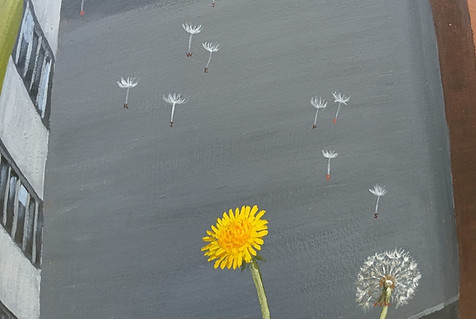
Leiden University of Applied Sciences is researching the influence of nature on the language development of young children. This showed that after just an hour of playing in nature, children use a larger vocabulary in their stories than after an hour of playing on a tiled schoolyard. Letters hang from the blowing fluff: decipher the word that can be formed with this (but look for all the fluff on the bulb)!
Artist Rafael Martig and community input

Rafael Martig, artist and biologist, painted the giant bulb showing the research being done on biodiversity at Leiden University of Applied Sciences, Naturalis and Hortus Botanicus. He has painted plants, soil animals, but also iconic Leiden buildings in beautiful detail. Rafael painted live at three locations and initiated conversations about biodiversity with visitors. They gave suggestions of animals and plants that they would like to see on the bulb. Read and listen to an interview with Rafael about the background and purpose of this special work of art here.
Icons in Leiden

On the bulb, well-known buildings in Leiden are painted and visible from afar. The following iconic buildings can be recognized in this photo: Naturalis, Leiden University of Applied Sciences, the Hortus Botanicus, windmill "de Valk", the Leiden University Medical Center (LUMC).

Partners


